
Dear Members,
Thank you for participating in this year's voting and annual meeting process. It is the true meaning behind the cooperative principles and owning your electric utility.
If anyone is interested in running in next year's, election please reach out anytime to WEC at 802-223-5245.
Quick Links
VOTING
In 2023, voting will take place by mail and in person at the Annual Meeting. In April, you’ll receive a packet containing ballots for the Board of Directors election and any bylaw changes, plus the Annual Meeting issue of Co-op Currents. Check the deadline to post your votes by mail. WEC members may write in names of unofficial candidates. All candidates run at-large.
WEC will hold an in-person Annual Meeting on Thursday, May 4, 2023. Members are welcome to vote in person this year.
If your voting packet is missing any items, contact us immediately at 802-224-2322.
Thursday, May 2, 2024
Doors open at 4:30 p.m., program begins at 5:00 p.m., buffet opens at 5:30 pm
Barre Auditorium - 16 Auditorium Hill, Barre, VT 05641
Unapproved - 2023 Annual Membership Meeting Minutes - please click to review
At the Annual Meeting...
- Director elections, Co-op business, Q&A with staff and Board members
- Registration and ballot boxes open at 4:30 pm; Buffet opens at 5 pm
- Business meeting begins at 6:00 pm (tentative) - Agenda here
- Dinner at no charge by reservation only*
- All are welcome, including kids!
Special Presenter: Erica Heilman, producer of the podcast Rumble Strip.
Questions? Please call Rosie Casciero at 802.224.2322.
*To help reduce waste, no-shows will incur a $3 charge on their May electric bill. If you find that you are unable to attend after registering, please call Rosie before April 26 to cancel the reservation and you will not be charged. Thank you!
Current BOD Candidates

Growing up, I lived in the same building that housed the country store my parents operated. The Lake Parker Country Store was the center of our small West Glover community; the importance of reliable, affordable electricity to its operations was apparent to me at a young age. Likewise, stacking 14 cords of wood a year with my brother to keep the drafty building warm inspired my interest in building efficiency. After graduating from UVM, I lived out of state for eight years. Moving back to Vermont in 2001, I founded Fit Werx, a customer-facing bicycle business in Waitsfield, and started energy improvements on my first building.
From home heating and cooling to charging access for my EV, I experience daily what electrification means. Electrifying the heating systems in multiple old Vermont farmhouses, including our home in East Montpelier, has allowed me to see firsthand what it takes to move toward efficient, electric solutions that reduce pollution. While improving insulation and weather-sealing is beneficial to all buildings, electrifying home heat systems is not always simple or universally practical. Details matter, and transitions aren’t always easy to make. I have practical perspective on where the energy system is heading, the importance of WEC supporting members through that transition, and what other utilities offer (rate structures and distributed energy/battery programs, for example) that WEC should consider.
Greater electrification requires that WEC’s electricity be reliable and affordable. It also requires that WEC offer members programs and rate structures that reduce costs and lead to successful energy-related decisions. In an increasingly competitive energy marketplace, WEC’s vertical structure (as both a generator and a distributor of electricity) offers opportunities that many utilities do not have. With the right decisions and communication strategies, WEC can offer members a future that is more affordable (yes, lower rates), more reliable, and more energy-independent.
I have attended or viewed every WEC Board meeting over the past two years, and I’m a member of the Energy Action Network (EAN), an organization dedicated to energy data analysis in Vermont. I’m running for the WEC Board because I want to contribute my business, communications, and planning experience to help guide the Co-op toward a future that is dependable, financially sound, and responsive to members’ changing energy needs. I would be honored to earn your vote.
Please don’t hesitate to reach out to talk about energy and WEC.

My name is Don Douglas and I live in East Orange at 21 Douglas Road. I have lived there since 1980 and have been a WEC member since 1978. I retired after delivering mail for 37 years in the scenic parts of Topsham, Washington, Corinth, Orange, Newbury and Bradford. I can be reached at home at 439-5364 or by email at dondougla@gmail.com. I am always happy to talk about WEC and energy issues and I realize everything is way more complicated than it ever was before.
In March I will be finishing my term at the NRECA representing the state of Vermont. It has been an honor to serve and very much a learning experience for me. Every cooperative has a different set of challenges unique to the geographic and political situation. I have served on the WEC board since 1999 and have been the Board Treasurer since 2000.
It seems that co-ops have always been part of my life. I grew up in East Tennessee which is served by the TVA. When I went to college I joined and helped start food co-ops and even a garbage co-op that was making compost in Austin, Texas. Here in Vermont we started the Sugar Maple Cooperative Nursery School in 1984. Co-ops exist to serve a need. More than 50% of the land mass of the United States did not have electricity before the creation of the REA in 1937. WEC serves the most rural and the most difficult terrain in Vermont because there is less money to be made in serving us. Despite the challenges of weather and geography, WEC supplies reliable renewable energy to our more than 11,000 members.
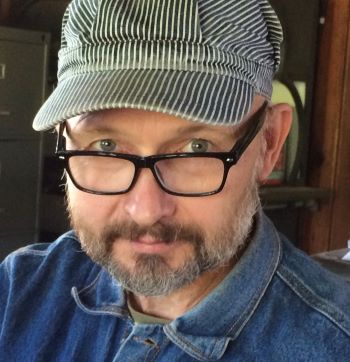
Residence: Five generations of my family have been WEC members since power lines were strung through my hometown, Plainfield. The family farm’s WEC membership has been in my name since 1995. My contact is Steven4WEC@Gmail.com, or 802 917 2581.
Background: Graduated local school system, secured Associate’s in Electronics (with Honours) from VTC; subsequently furthered studies in Business Administration at UVM, and the International College of Cayman Islands. Engineering career consisted of work in communications, Quality Assurance, Manufacturing Technical Support.
Community: WEC Board 2019 – 2025, WEC Power and Operations, and Member and Markets Committees, as well as present or past service on boards of Hunger Mountain food co-op, Vermont Philharmonic, and Cutler Library. Served with Cutler Friends of the Library, Plainfield planning commission, and Justice of Peace. Eighteen years host of weekly community affairs program – WGDR-91.1FM.
Current membership in four co-ops: Credit Union, Co-op Insurance, Hunger Mountain Food Co-op, Washington Electric, and lapsed/past memberships in seven others: Cabot Creamery, City Market (Onion River Co-op), Energy Co-op of Vermont, Granite City Grocery, Onion River Exchange, Plainfield Co-op, Vermont Development Credit Union (now Opportunities Credit Union).
My affinity for co-ops stems from their obligation to serve their members. No IOU can claim that. Washington Electric Co-op serves its members well; I am committed to seeing this continue and improve. It was an honour to serve two terms; I’d appreciate your support to serve another. Thank you.
In a recent commentary in the December issue of WEC’s Co-op Currents, net metering is characterised as a subsidy that was for a “fledgling industry” that the author didn’t think was intended to continue “now that the solar industry is mature.”
100% of the cost of a heat pump water heater recently installed in my home was covered by Efficiency Vermont. Isn’t plumbing a “mature industry”? With incentives, my partner bought an electric vehicle at a 44% discount. Isn’t automobile manufacturing a “mature” industry?
WEC seems comfortable with folks installing solar if they couple it with storage. A member who net meters is at least paying WEC $360.00 in annual customer charges; a member who installs storage and severs ties with the grid pays WEC zero dollars. How does that help WEC or non-net metering WEC households?
In my view, the solution for net metering is not to discourage development of solar, but instead, to reform the means by which solar is incentivised.
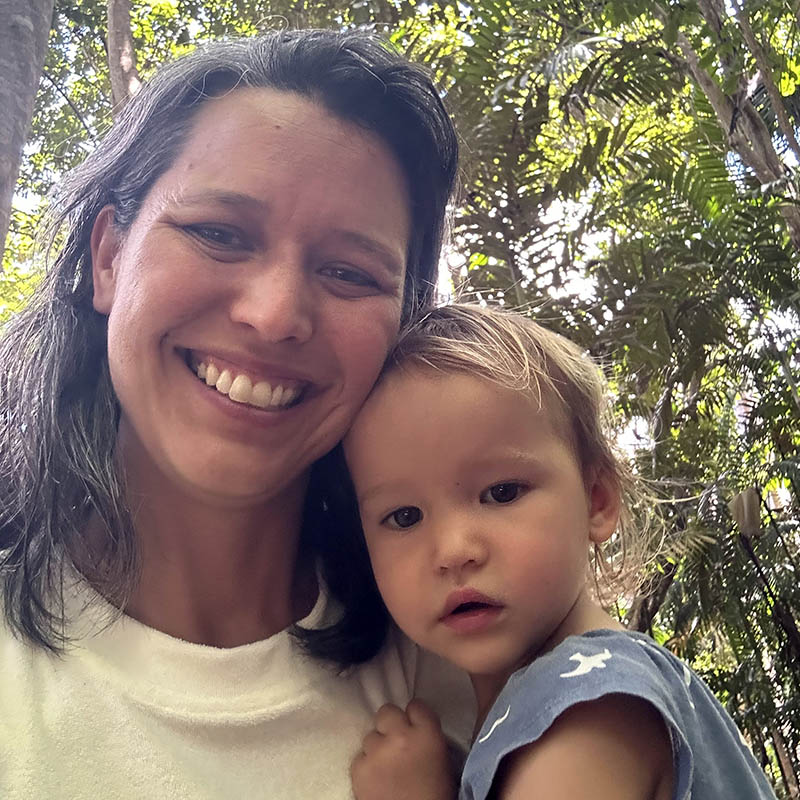
I have been a WEC member from Plainfield since 2014 and a member of the WEC Board since 2017. Members are welcome to contact me by phone 802-777-6546 or by email jean.myung.hamilton@gmail.com.
Since moving to Vermont in 2000, I have worked with my communities to build strong local economies based around thriving farms and local foods markets. This work has given me a front
row seat to the strength, expertise and creativity that quietly blazes through our rural communities. Because of you, I believe our homes and businesses can and should be powered by an electric utility that we co-operatively own, govern, and benefit from.
Food and energy are similar: they are essential to our lives, they have large environmental impacts, and they operate in highly complex market systems. Agriculture and energy markets are something we all have opinions about but often feel like our choices are so limited. Challenging as they are, locally owned businesses, like WEC, give us choice. Our Washington Electric Cooperative gives us, a community of rural neighbors, the right to navigate and balance each others’ energy needs – to work it out together. Within this Co-op we can be sure that never ever will far-away billionaires make decisions for us. And we can be sure that whenever WEC generates a profit, those profits are returned directly to us, the member-owners.
I am running for the Board because I love our rural communities. I believe our communities deserve to own an economic and community asset as important as our electricity. I am skilled at policymaking, organizational development, community building, and strategic planning. If you elect me to serve on the WEC Board, I will apply all these skills to make it easier for you to affordably, renewably and reliably meet your energy needs. Beyond that, I hope to dedicate my Board position to activating the WEC membership to lean in and work together to answer the questions that WEC’s original founders faced in 1930: What do we do when no one is coming to help us? How do we take care of one another? What can we accomplish when we work together?
If the history of WEC is new to you, I encourage you to check out the stories at https://www.washingtonelectric.coop/about-wec/history/
Go WEC!