
October is Co-op Month, and it’s also conference season. While I attended a committee meeting related to my duties on the board of the National Rural Electric Cooperative Association (NRECA), several of my fellow Board members and GM Louis Porter attended the conference for our regional association, Northeast Association of Electric Cooperatives (NEAEC), which includes co-ops in Vermont, New York, New Hampshire, Maine, and Rhode Island.
Part of Co-op Month is reflecting on how the cooperative model can stay relevant and functional in changing times and a changing climate, and how electric co-ops work here in Vermont, in the Northeast, and in the nation. We asked everyone who went to a conference to share an interesting takeaway with members reflecting on WEC and co-ops, here and now. – Don Douglas
Representing Vermont Co-ops
By Don Douglas
I live deep in the pucker brush of Orange County. Four years ago I was elected to represent Vermont to the National Board of the NRECA. It has been both an honor and an education. Cooperatives serve 56% of the landmass of the US. They can be small like WEC or enormous like Pedernales Electric which serves an area about the size of the state of Vermont. 42,000,000 people get their electricity from cooperatives and they serve 92% of persistent poverty counties. WEC is one of the most progressive coops in the country but all co-ops are governed in the same way and endeavor to provide safe, reliable and affordable power to their members.
Resilient Utilities
By Betsy Allen
Washington Electric Coop is part of a larger organization of co-ops across the country—the National Rural Electric Cooperative Association (NRECA), serving over 48 million people. We are just one among about 900 co-ops!
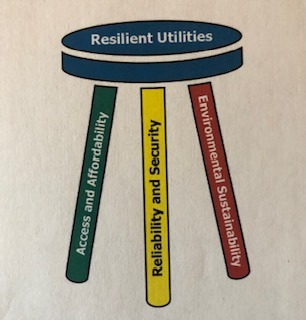
“Co-ops are the drivers of innovation in our communities,” explained Michael Partin, President of NRECA. As electric use grows, we will need more power. NRECA’s Energy Policy for Resilient Utilities builds on a tri-lemma of three considerations: Access and Affordability, Reliability and Security, and Environmental Sustainability.
Satisfying these three legs of utility resilience are often difficult to balance. Michael Partin said that what works in Maine is not the same as in Vermont or Mississippi and that co-ops need the flexibility and freedom of choice to tailor their energy policies for their members. I believe that WEC is doing this hard work of balancing these factors, to keep us a strong and resilient utility.
Managing the Duck Curve
By Susan Alexander
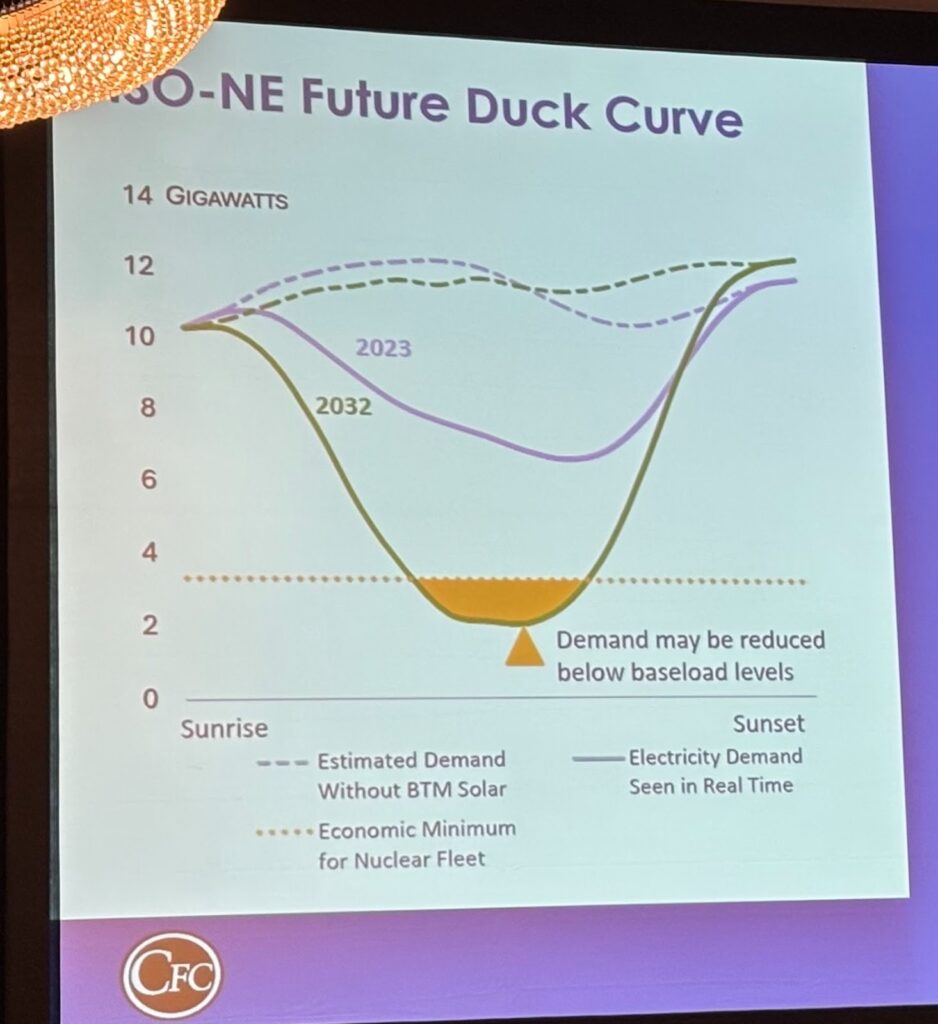
The addition of behind-the-meter solar is climate smart and a reasonable consideration when making energy decisions for your residence. ISO-NE, our regional electricity broker, has estimated a 5.38% increase in demand over the next five years, much of that to be met from increased distributed generation. Furthermore, it is anticipated that by 2032 during peak solar hours, demand will be reduced to below baseload levels (creating a significantly exaggerated duck curve.) The question remains what to do if those conditions actually come to fruition. Flexibility will be required to ensure equilibrium as these intermittent resources are deployed.
Cooperatives Sharing Their Findings About Batteries
By Steve Knowlton
Many of us were intrigued by a talk about a cooperative utility’s experience with the use of battery storage in their operations. The utility is our neighboring cooperative Vermont Electric Cooperative. They have recently made use of several schemes of utility scale and residential scale batteries, mainly for reducing the utility’s overall electric load during times of high usage in both the state and all New England, since the cost of electricity and related services are high at these times—this is called peak-shaving. They explained what they found to be the pros and cons of each approach they tried. In my opinion, the audience was delighted to hear someone reporting on actual results they could potentially use themselves, and for us Board members to learn the details of how battery storage is actually done, why it costs what it does, what are the numerous options for deployment, and what business structures are possible (and optimal). It was a great example of cooperatives helping each other by sharing their experience, and a good reason why I was glad to be able to attend the conference on WEC’s behalf.
Prioritizing Safety
By Pat Barnes
A discussion of pre-shift safety meetings for line crews helped me consider new priorities.
I admire our crews who are out in the worst conditions, for long hours managing wires, poles, and trees that can turn deadly in an instant.
I want WEC’s crews to be trained, equipped, and assigned to complete their work and safely return to their families.
When I reflect on the goals of affordability and reliability, I realize these goals pale when measured against the welfare of our crews taking care of our powerlines. If I’m temporarily inconvenienced when our region’s climate, terrain, and forest conspire to cause power outages, I want to recommit myself to supporting the men and women of our crews with all due patience and funding.